
Panels That Handle Modern Electrical Demand
Electrical Panel Upgrades in St Amant for homes with frequent breaker trips, visible rust inside the panel, or new high-draw equipment like EV chargers and solar arrays
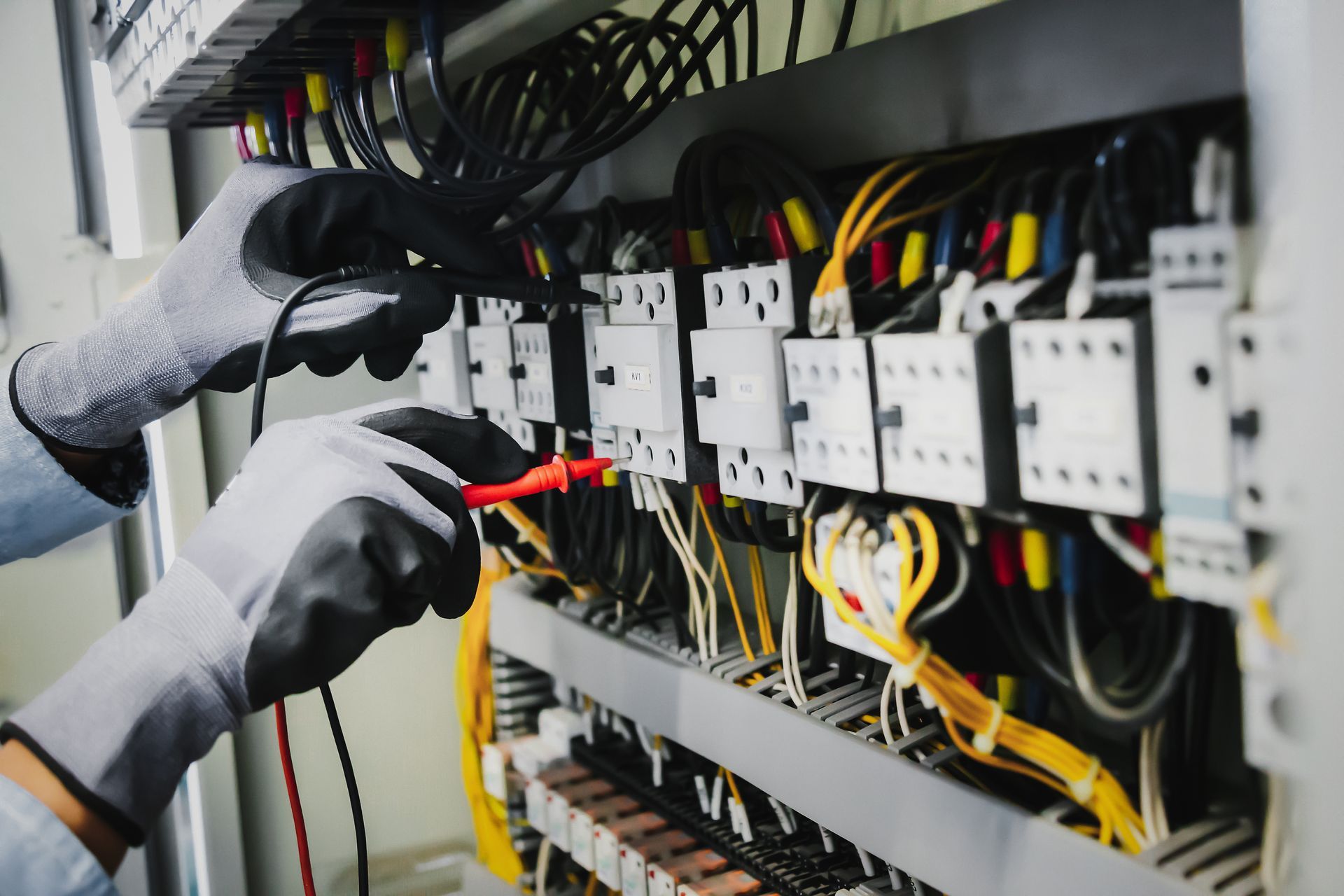
When breakers trip multiple times per week without overloading individual circuits, when you see rust or corrosion on bus bars inside the panel, or when you're adding equipment that exceeds your current panel's capacity, the panel itself has become the limitation. Murry's AC, Heating, & Electrical upgrades electrical panels for residential and commercial properties in St Amant to support added loads from EV chargers, solar panel systems, tankless water heaters, and HVAC upgrades. Homes over 40 years old often operate on 100-amp or 150-amp service that can't accommodate modern electrical demands, and flickering lights during startup of large appliances signal that voltage is dropping across the system under load.
Panel upgrades involve installing a new enclosure with higher amperage capacity, replacing the bus bars and main breaker, and reconnecting branch circuits to the new panel. The utility company typically replaces the meter base to handle increased service capacity. In older St Amant homes, the upgrade also addresses outdated breaker types, such as Federal Pacific or Zinsco panels, which are known to fail in ways that prevent breakers from tripping during overloads.
Request a detailed estimate based on your current panel capacity and the equipment you plan to add.
Upgrading to a higher-capacity panel eliminates voltage drop issues that show up as dimming lights when heavy equipment starts. The new panel distributes current more evenly across circuits, and modern breakers respond more reliably to fault conditions. If your previous panel had 20 circuit positions and you were doubling up circuits on single breakers, the upgrade provides enough breaker slots to separate loads properly.
After the upgrade, you'll notice that lights remain steady when the air conditioner compressor kicks on, that you can run multiple high-draw appliances without tripping breakers, and that the panel box itself stays cool to the touch during normal operation. The upgrade also removes fire hazards associated with corroded connections and breakers that no longer trip at their rated threshold.
Panel upgrades often coincide with whole-home surge protection installation, which protects sensitive electronics from voltage spikes caused by lightning strikes or utility switching events. The surge protector mounts inside the new panel and diverts transient voltage to ground before it reaches connected devices. This is separate from the small plug-in surge strips used for individual outlets.
Why Upgrading the Panel Stops Voltage Sags
What Property Owners Usually Ask
Panel upgrades raise questions about timing, permitting, and how the work affects daily electrical use during installation.
How do you know if your home needs a 200-amp panel versus a 150-amp panel?
Calculate the total load by adding up the wattage of all installed equipment, including HVAC, water heater, range, dryer, and any planned additions like EV chargers. A 200-amp panel is standard for homes over 2,000 square feet or properties adding multiple high-draw devices, while 150-amp service works for smaller homes with moderate electrical demand.
What happens to power in the house while the panel is being replaced?
Power is shut off at the meter during the panel swap, which typically takes four to six hours. You won't have electricity during that window, so plan accordingly if you work from home or have medical equipment that requires continuous power.
Why do older panels develop rust and corrosion inside the enclosure?
In St Amant's high-humidity environment, moisture enters through conduit penetrations or through the panel cover if it's mounted on an exterior wall. Once moisture contacts the bus bars or breaker terminals, oxidation increases resistance at connection points, which generates heat and accelerates corrosion.
What's involved in coordinating the utility company for a service upgrade?
The utility replaces the meter base and, in some cases, the service drop from the transformer to your weatherhead. This is scheduled separately from the panel installation, and the electrician coordinates the timing so that the new panel is ready when the utility crew arrives to reconnect service.
Do you need a permit for a panel upgrade?
Yes, panel upgrades require electrical permits in most jurisdictions, and the work must be inspected before the panel is energized. The permit ensures that the installation meets current code for grounding, bonding, wire sizing, and breaker ratings.
Murry's AC, Heating, & Electrical handles permit applications, utility coordination, and final inspections as part of the panel upgrade process. Schedule an evaluation to assess your current service capacity and determine what size panel your property requires.